
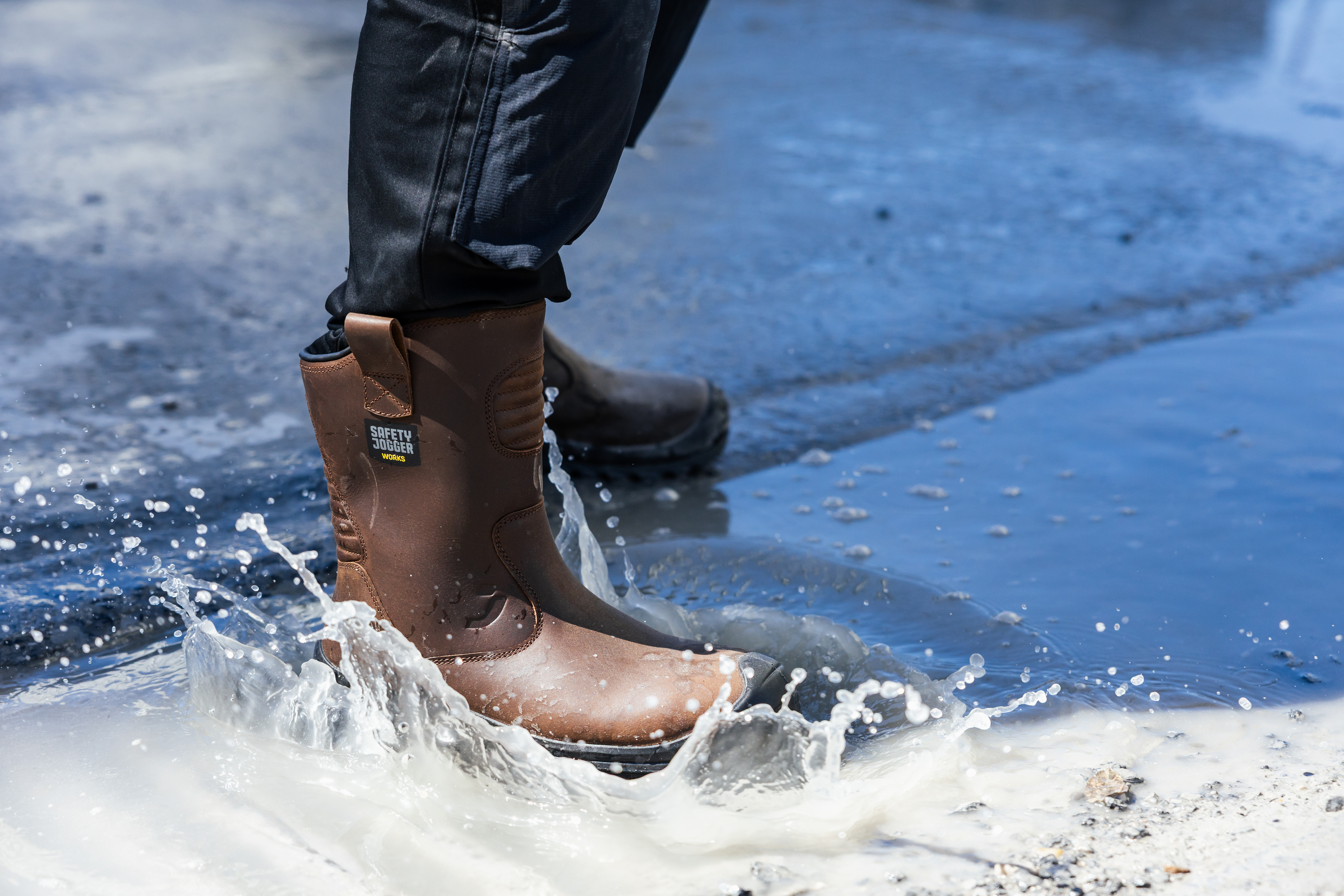
Ever wondered what the labels waterproof and water-resistant really mean on a job site, and why they’re not the same? These terms might sound similar, but they offer completely different levels of water protection.
Under the latest EN ISO 20345:2022 standards, these terms represent different levels of protection. Let's dive in (without getting our feet wet) to clear up the confusion so you can choose the right safety footwear for your job.
Key takeaways
- Waterproof safety shoes carry the WR marking. The complete shoe has been tested for water resistance.
- Water-resistant safety shoes carry the WPA marking. Only the upper material has been tested for water penetration and absorption.
- S6, S7, O6 and O7 include WR. S2, S3, O2 and O3 include WPA, but not WR.
- An S3 shoe isn't automatically waterproof. For waterproof protection, look for WR or S7.
- Choose WR for long shifts in wet conditions. WPA is usually enough for light rain and occasional splashes.
What are waterproof safety shoes?
In short: Waterproof safety shoes are built to keep water out of the whole shoe, even during long exposure to wet conditions. They carry the WR marking, which shows the complete shoe passed a water resistance test in the lab
What does WR mean on safety footwear?
WR stands for water resistance of the whole shoe. It tests the complete shoe in water, including the seams and the joint between upper and sole. That's why WR is the marking to look for when you need waterproof footwear.
WR is included in four classifications:
| Classification | Footwear type | Standard | Includes |
|---|---|---|---|
| S6 | Safety footwear | EN ISO 20345:2022 | S2 + WR |
| S7 | Safety footwear | EN ISO 20345:2022 | S3 + WR |
| O6 | Occupational footwear | EN ISO 20347:2022 | O2 + WR |
| O7 | Occupational footwear | EN ISO 20347:2022 | O3 + WR |
How do manufacturers make safety shoes waterproof?
The standard tests the result, not the construction. Common ways to keep water out include:
- A waterproof, breathable membrane keeps water out while letting moisture from your feet escape.
- Sealed seams stop water from getting in where parts of the upper are joined.
- Non-wicking, water-resistant uppers keep water on the outside of the shoe.
What does non-wicking mean?
Non-wicking uppers actively repel moisture. Rather than drawing water into the shoe, the outer material forces liquid to stay on the surface where it can bead up and roll off. This ensures your feet stay entirely dry, even in wet environments.
What do waterproof shoes protect against?
WR shows that a shoe keeps out water, whether that's rain, puddles, snow or meltwater. It doesn't certify resistance to oils, chemicals or acids. For those risks, check the shoe's other markings, such as FO for a fuel oil-resistant outsole, or certification to a chemical-protection standard such as EN 13832.
Bottom line: If your job involves long shifts in wet or humid environments, such as road work, cleaning, or delivery, waterproof shoes are your best friend.
What are water-resistant safety shoes?
In short: Water-resistant safety shoes have an upper that resists water for a limited time. They carry the WPA marking, which is included in the S2, S3, O2 and O3 classifications.
WPA stands for water penetration and water absorption of the upper. It replaced the WRU marking from EN ISO 20345:2011. Only the upper material is tested, not the whole shoe. So with longer exposure, water will eventually get in.
They’re perfect for:
- Light rain
- Small splashes
- Occasional contact with water
- Short exposure on damp surfaces
If you work primarily indoors, in dry warehouses, or in trade environments where water makes a brief cameo rather than playing a main character, water-resistant shoes will do the job.
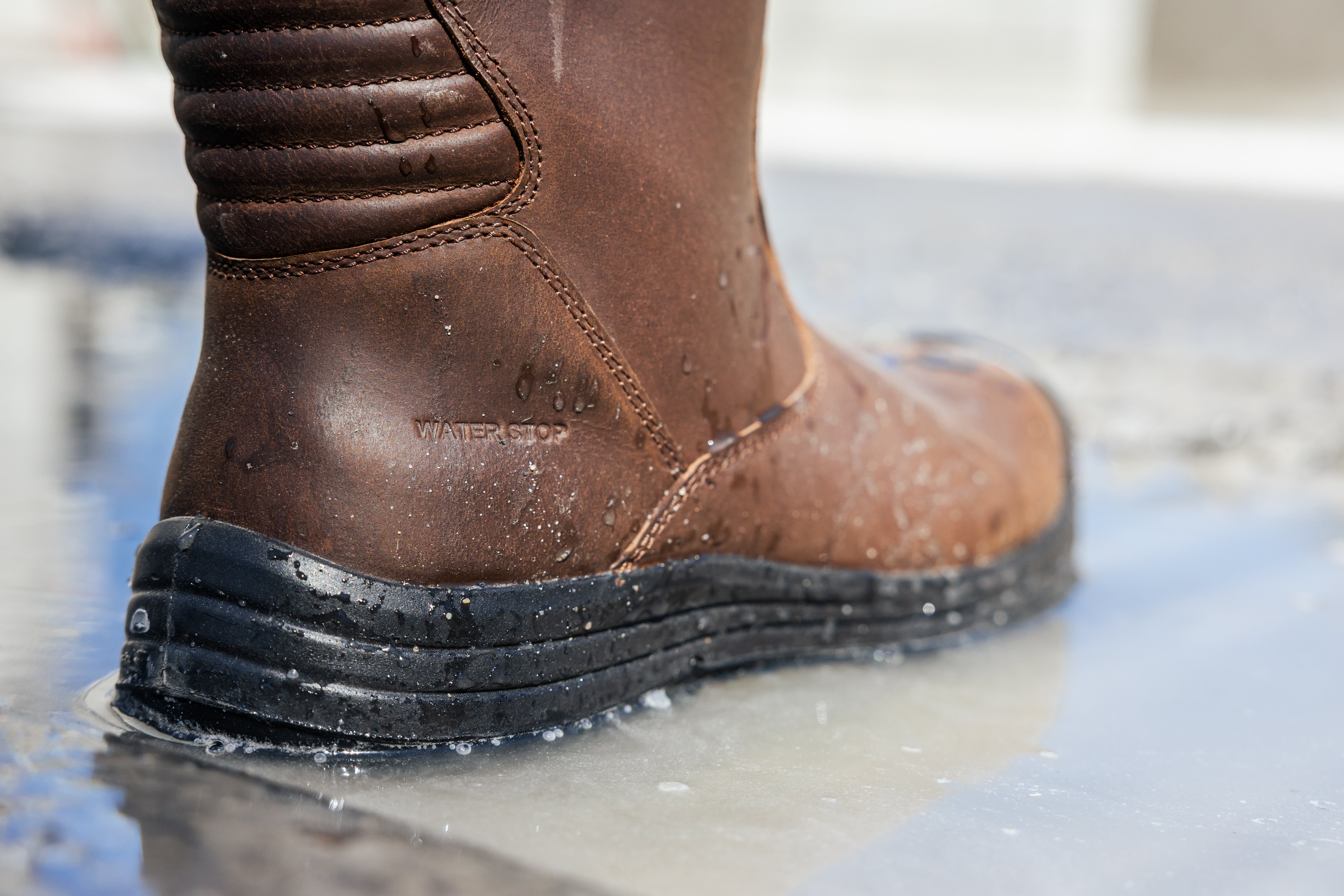
Waterproof vs. water-resistant safety shoes: key differences
In short: Waterproof (WR) shoes are tested as a complete shoe and keep water out during long exposure. Water-resistant (WPA) shoes are tested on the upper only and keep water out for a limited time.
| Waterproof safety shoes | Water-resistant safety shoes | |
|---|---|---|
| Marking | WR | WPA |
| Classifications | S6, S7, O6, O7 | S2, S3, O2, O3 |
| What's tested | The complete shoe | The upper material only |
| Protection | Keeps water out during long exposure | Resists water for a limited time |
| Best for | Long shifts in rain, mud, snow or wet environments | Light rain, splashes and occasional contact with water |
If you only work in light rain or walk through the odd splash, water-resistant shoes will usually do the job. If your workday involves hours in rain, mud or wet environments, choose waterproof shoes.
Best safety shoes for wet working conditions
- Basalt - Waterproof Safety Boots With ESD Protection | Safety Jogger
- Goras7 - High safety boot with breathable leather upper and Tiger Grip Technology | Safety Jogger
- Calderas7s - Waterproof Leather Rigger Boot | Safety Jogger
FAQ
Are waterproof safety shoes completely waterproof?
Yes. Safety shoes marked WR have been tested as a complete shoe according to EN ISO 20345:2022 and are designed to prevent water penetration during prolonged exposure to wet conditions.
What is the difference between WR and WPA safety footwear?
WR means the entire shoe is waterproof. WPA means only the upper material has been tested for resistance to water penetration and absorption.
Are S3 safety shoes waterproof?
Not necessarily. S3 safety shoes are generally water-resistant but are not automatically waterproof. Look for the WR marking or S6/S7 classification for waterproof protection.
Which safety shoes should you wear in wet conditions?
Waterproof safety footwear with WR certification provides the best protection for workers who spend long periods outdoors in rain, mud, snow or wet environments.